Wednesday, January 30, 2019

Weeds of the West: A Field Guide Review

The Best Weed Field Guide for the West I've Seen


I just discovered the best field guide I've ever seen for identifying weeds here in California. I'll finally be able to properly name all those I find and photograph while out walking and on my own property. The book was sitting on the shelf at my local public library. At almost an inch and a half thick, Weeds of the West includes almost every weed I've seen in my area. It's published by the Western Society of Weed Science. Its seven authors all have advanced degrees and specialize in weeds. I'm reviewing the 5th Edition published in 1996, but there are later editions I haven't yet seen.

Weeds of the West: A Field Guide Review
Wild Cucumber with Grasses and Mustard, Photo © B. Radisavljevic


What I Love about This Reference Book


It's more like what's not to love? The picture quality is excellent. The arrangement of listings is logical. The descriptions provide all the information farmers, campers, gardeners, or hikers need to identify the weeds they encounter. Finally, the pages at the back make everything easier to find and understand.

The Photographs

Poison Hemlock

There are three photographs for each plant listed. Let's look first at the poison hemlock plant listed on pages 22-23 in the 5th edition of Weeds of the West. It's a weed found almost everywhere in San Luis Obispo County that's not cultivated. Each listing has three images like this.

Weeds of the West: A Field Guide Review. This book has all one needs to identify weeds growing in the Western United States.
My scan of pages 22-23 in the 5th edition of Weeds of the West (Western Society of Weed Science)
First we see the overview of the plant in bloom in its habitat. We can compare its height to the other weeds near it. The opposite page shows a close-up portion of the stem, covered with the purple spots that help one distinguish poison hemlock from similar looking plants. We also get a close-up of the leaf. It's a much more detailed look that one would get from the overview shot.

In Roadside Plants of California, Thomas Belzer has given poison hemlock a playing-card size color photo of the top of one flowering stem. It has a good shot of the flowers and a couple of leaves, but the descriptive paragraph doesn't even mention the purple spots. It does mention that Wild Celery is a near look-alike that is not poisonous. Weeds of the West does not mention that.

The Sunset Western Garden Problem Solver's photos of  poison hemlock are so small they are almost useless. You get an overall idea of what one section of leaves and flowers looks like, but no view of the entire plant or its surroundings. You have to rely on the written description of the purple spots because the inset photo is only an oval of 1" x 1½."  It's a good book as far as it goes, but it's purpose is more to help gardeners identify the weeds so they can manage them.

The large full-page photo in Weeds of the West shows as much of an overview as possible, and if a plant is too tall for a photo to hold it all, you will see as much of it as possible for identifying its form. The two smaller photos on the opposite page under the description zero in on the two most important plant characteristics for identifying it. For poison hemlock you see the purple stem and a leaf. For western waterhemlock the smaller photos are a branch with leaves and a split distinctive root, its most poisonous part.

Matt Ritter in California Plants and Plants of San Luis Obispo County has photos with the same high quality, but the book lacks the overview shot. The book also has fewer plants included than Weeds of the West, since it's more specialized. See Review of California Plant Field Guides by Matt Ritter for a more thorough review of his field guides.

Jointed Goatgrass

When I work in my garden, it seems the weeds that bother me the most are the grassy weeds. So far I've had only the Ritter books and the Sunset Western Garden Problem Solver to help me identify these pests, and they haven't helped as much as I'd hoped. But Weeds of the West identifies at least twice as many of these grassy weeds as the other books. I'll admit it covers more than just California, and that may be part of the reason why.

My scan of pages 408-409 in the 5th edition of Weeds of the West (Western Society of Weed Science)
Look at the right page of the photo above. The top photo on that page shows the part of the plant where the leaf joins the stem -- something people like me might not even notice. (I do now.) This leaf juncture often provides key identifying information, but many books only show the grass blades or spikes and the flowering part of the plant (inflorescence) or seeds with or without a pod. I like that the photos in this book show a close-up of this juncture when important. The text also points it out so I know what I should look for.

The Arrangement of the Listings


Weeds of the West entries are arranged by plant families. Many other books are arranged by habitat. Both arrangements are useful, but I find the arrangement by family helps me see that plants I never would have suspected are related to each other. Since related plants don't always need the same growing conditions or share a habitat, having them together in a book section make the relationships more obvious. 

If you look at the tops of my scanned pages above, you will see the left page has the common name for the weed in boldface at the top. Under it is the scientific name in italics. On the page on the right we see the common name again followed by the plant family's scientific name. Under that is the common name for the plant family. I'm not surprised that poison hemlock is related to wild carrot and wild caraway. I am surprised that the bull thistle is related to the sunflower. I'm amazed at all the cousins the sunflower has.

Weeds of the West: A Field Guide Review
This photo I took in my yard features the wild cucumber (also called manroot.) Weeds of the West will help me  identify the wild grassy weeds that surround it. Photo © B. Radisavljevic


The Text Descriptions


The text that accompanies the photographs in Weeds of the West provides any other information it takes to identify the plant. It points out where to look for what in the photos. It tells you where the plant is native, its size, and its growth habit -- tall and erect  or prostrate and sprawling. Words describe the color and the odor of each plant part if it's a factor in identifying it..

Leaf descriptions include whether they are dull or shiny, how their edges look (smooth or sawtoothed), whether they are divided and if so how many times, how they are arranged on the stem (opposite or alternating), and anything special about how they are attached. Flowers and seeds are also thoroughly described.

The last paragraph explains where you are likely to find the plant (habitat.) It also mentions any other important  information you may need to know. Is the plant poisonous to humans or animals? If it's poisonous, does it resemble closely a plant that is safe?

Handy Helps in the Back of the Book


Many listings use terms laymen may not understand. So there is a Glossary at the beginning of the back matter. Next is an  easy-to-use "Key to the Families in Weeds of the West." It describes what the plant families have in common and what distinguishes them from one another. The final  aid to readers is an index that includes both common and scientific names.

Weeds of the WestWeeds of the WestCheck Price


Used editions of this book vary in price.

Should You Buy This Book?


If you live in the American West and garden or spend a lot of time outdoors where wild plants grow, I think you would find this book a helpful addition to your home library. I take a lot of photo walks in parks and I also garden. I like to be able to identify what I photograph, and most books don't supply the information I need. This book is more complete than any of the others I have seen or have on my shelf. The print is large enough for even me to read easily, and the publisher did not skimp on the photos.

 There are bound to be a few mistakes in a book this large -- 630 pages. I don't have the scientific background to judge the facts, but the authors certainly have academic credentials that indicate they know these plants well. I did find one omission quite by chance. I wanted to see if Queen Anne's Lace was listed in the book, since I hadn't seen it with others in the parsley family. It was in the index, but the name of the plant on the page I was directed to only said  "Wild carrot" with Daucus carota L. under it. Nothing in the page for Wild carrot mentioned that Queen Anne's Lace was another common name for it. I had to find that out on the internet.

As soon as I can afford it I will probably buy this book. I'm interested in nature and especially in wild plants, so for me it would be worth it. I like the convenience of a handy reference book when I have a question.


Buyers should be aware that this is not exactly a field guide. It's too large and heavy to take hiking. It does, though, draw attention to parts of plants you should remember to photograph to identify at home later. I have never realized how important it is to observe how the leaves are attached to the stem, for example. If you have found other books for identifying wild plants too limited, I believe you will find this book is different. I believe it's worth buying for the presentation and completeness of the information.
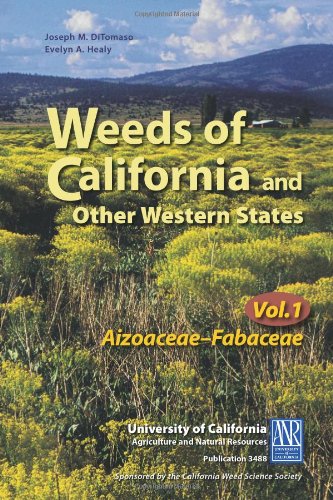


As I was finishing this review I saw another book that may be even more complete. If you're interested in California weeds, you may also like Weeds of California and Other Western States (in two volumes.) I used the "Look Inside" feature on Amazon to check it out and it, too, looks like a book I'd like to own.

Weeds of the West: A Field Guide Review
Photo © B. Radisavljevic

More I've Written about Common California Weeds


Poison Hemlock: Lovely and Lethal: a photo essay with original photos from my property and my nature walks.

Milk Thistle and  Hemlock: The Prickly and the Poisonous: A Photo essay that shows both these common western weeds at all stages of growth so you can easily identify them.

Oak and Poison Oak in Photos: Can You Tell the Difference?: This will help you recognize poison oak  during all stages of growth and in any season. Our local police department asked to use parts of this to help train their search and rescue teams.

Weeds I Love to Hate: Photos of my worst weed enemies and why I hate them

Vetch Runs Wild: Short post from my gardening blog with many photos of vetch I took while hiking

The California  Weeds You Need to Pull Now! If you get them while they are young they won't cause as much trouble later.


Note: The author may receive a commission from purchases made using links found in this article. “As an Amazon Associate, Ebay (EPN), Esty (Awin), and/or Zazzle Affiliate, I (we) earn from qualifying purchases.”


Tuesday, January 29, 2019

Bamboo Pizza Paddle Reviewed

Convenient Way To Remove Pizza From Oven

cooked pizza
Pizza image courtesy of pixabay.com
I recently received a bamboo pizza paddle and honestly wasn't sure that I would ever use it. To my surprise, I actually love it! Can I tell you how many times that I have burned myself trying to take a pizza out of the oven? Let's just say a lot and leave it at that. 

We have pizza often at our house. There is an establishment near us that makes them for you to take home and bake in your own oven. These pizzas are delicious and this paddle has come in handy when I am ready to remove them. The size of the paddle more than accommodates the size of the pizza and it is so easy to use. Another advantage is that with it being constructed of bamboo, I can take the pizza out of the oven and also use the paddle as a cutting board. 

I don't know if you are aware of this or not so I'll share something about cutting boards and bamboo. This dense wood has become very popular with chefs and cooks around the world for use as a surface to cut fruits, vegetables and meats. Bamboo does not need as much maintenance as some of the other woods that are used for cutting boards. The bamboo doesn't retain water so your board won't become warped or cracked like the others do. Plus bacteria is less likely to grow because there is no water in the wood for it to propagate. Knives do not scar the bamboo as easily as other woods. Those scars can also be a breeding ground for bacteria. Bamboo is earth friendly and easier to grow than say a maple tree. The bamboo will mature in three to six years where a maple won't mature for thirty or more years. 

So, I am loving my bamboo pizza paddle as both a way to remove a hot pizza out of the oven and as a cutting board for the pizza and other foods. It is lightweight and with the handy hole at the end, I can hang it on the side of one of my cabinets for storage. Honestly, I wish that I had purchased one a long time ago. 

Pizza Paddle Made of Bamboo

What about you? Do you already own one or are thinking that maybe one would be nice to have in your kitchen?


Note: The author may receive a commission from purchases made using links found in this article. “As an Amazon Associate, Ebay (EPN), Esty (Awin), and/or Zazzle Affiliate, I (we) earn from qualifying purchases.”


Monday, January 28, 2019

Reviewing the Marvelous Mrs. Maisel

Reviewing The Marvelous Mrs. Maisel
The Marvelous Mrs. Maisel is an Amazon original series set in New York in 1958, starring Rachel Brosnahan. Mrs. Maisel (Brosnahan) is living her dream. She is married, loves her husband, has two children, and lives in a beautifully appointed apartment in Manhattan. From a very young age, she has dreamt about and planned it all: college, wedding, and her adult life trajectory. She tells us about it during a flashback to her beautiful wedding. Everything is going exactly as planned, until suddenly - in one evening - Mrs. Maisel learns that others can completely de-rail her best plans.

Midge Maisel is a loyal, happy housewife who works hard to please her husband. Mr. Maisel (Joel) is a salesperson with an office job. But at night, he performs at a club as a stand-up comedian. He's not very funny and Midge bribes the club manager with briskets to get Joel into better time slots with a better audience. On the same night that he completely bombs, things completely fall apart for Midge. She is devastated and lost. Am I making this sound like a drama? It is not. It is a comedy full of quirky characters.

A co-worker told me to watch the Marvelous Mrs. Maisel. Since she has recommended an author that has quickly become my favorite, I trusted her opinion and I began watching the series the first weekend I had a few spare minutes. I am able to watch it for free because of my Amazon Prime membership. I watched several episodes that first day and binged watched into season 2 the next weekend. 

The Marvelous Mrs. Maisel reminds me of I Love Lucy - but a naughtier version. The buildings, clothing, baby carriages and way of life are all from that time period. Rachel Brosnahan's facial expressions and/or timing of her humor remind me quite a bit of Lucille Ball. She's a bit sneaky, like Lucy. An example being reminded of Lucy was during a scene at bedtime. Midge goes to bed in a negligee and still made-up. As soon as Mr. Maisel is asleep, Midge gets up and does her beauty routine; putting her hair in curlers and applying an over-night face mask. She sets the blinds so that the sun shines through the crack in the morning - waking her before the alarm. She completes her beauty routine and is back to bed; perfumed, made-up, and looking beautiful. She closes her eyes and he wakes. This scene made me laugh and reminded me ever so much of I Love Lucy

Am I making this sound like an I Love Lucy rehash? It is not. There is cursing, "sex" scenes (not the type of sex scenes shown on cable tv but sex scenes nonetheless), and some modern colloquialisms that aren't from the 1950s. For me, these things are a bit like watching a cartoon with a child and the cartoon includes adult humor and references - out of place but funny (although, I wouldn't be bothered by less profanity).

If the title sounds familiar, it may be because Rachel Brosnahan won a 2019 Emmy for Best Actress in a Television Comedy. Deservedly so, I think.


Note: The author may receive a commission from purchases made using links found in this article. “As an Amazon Associate, Ebay (EPN), Esty (Awin), and/or Zazzle Affiliate, I (we) earn from qualifying purchases.”


Sunday, January 27, 2019

Review of the Meaning Behind Different Colored Roses

The Meaning Behind Different Colored Roses
Did You Know that Each Rose Color Has a Unique Meaning?

With Valentine's Day around the corner, there's nothing carved in stone that says you have to give Red Roses.

If you want to send a different message, check out the meaning of each colored rose as described below. Once you determine what you really want to say, send a dozen roses of that color instead.

Red Roses

This one you know. It generally means "I love you". Sending red roses tells the person in no uncertain terms that you love them. It also speaks to beauty and lets the person know, that in your eyes, they're perfect just the way they are.

Yellow Roses

If you want to send someone a flower that expresses thanks for the friendship you share, yellow roses are a good choice. Yellow roses tell the person that they make you happy and you're thankful to have them in your life.

Lavender (Purple) Roses

If you've just met someone and you've got that love-at-first-sight thing going on between the two of you, then sending them purple roses says you're eager to continue and grow this unexpected relationship. Purple is also associated with Royalty, so if you happen to fall in love with a Prince or a Princess at first sight, send them purple roses.

White Roses

If you're looking to send flowers to someone you just met, white roses are the ideal choice. They're used in weddings to symbolize new beginnings but you don't have to be getting married to experience a new beginning. Don't hesitate to send them in the case of anything new; new job, new baby, new friendship, new love.

Pink Roses

Is there someone in your life that you admire? If so, send them pink roses. Perhaps it's a person who has accomplished a great deal, been an awesome friend or set an unparalleled example with their life. Sending your mother pink roses speaks to your admiration for her. Pink also represents gracefulness. For the person with high integrity and who behaves in a classy manner, pink is their flower.

Orange Roses

Orange roses speak to your excitement about being with a person. You're anxious to take on new adventures with them and your relationship is all about enthusiasm and, where applicable, desire. Give orange roses to the person you want to take on the world with. It doesn't have to be a love interest. In fact, if it's a good friend, give them a combination bouquet of yellow, orange and white roses.

Peach Roses

Do you want to send someone a 'Thank you'? If so, then peach roses deliver that message. If you're grateful for someone and what they've done for you, or for just being in your life, peach roses say it without words. When you want to show someone how much you appreciate them, add peach roses to your bouquet.

Now that you understand the general meaning of each rose, consider the message you want to convey and either mix and match them or give a dozen of one color.

If real flowers aren't doable, here's a collection of faux bouquets to send to that special someone:


Note: The author may receive a commission from purchases made using links found in this article. “As an Amazon Associate, Ebay (EPN), Esty (Awin), and/or Zazzle Affiliate, I (we) earn from qualifying purchases.”


Saturday, January 26, 2019

How to Keep Post-Workout Soreness At Bay - The Easy Way!

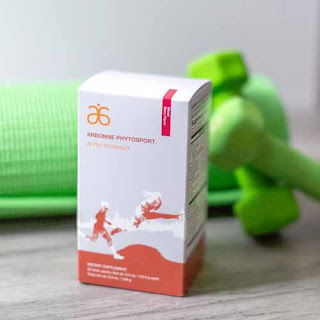
Phytosport After Workout Supplement to reduce post workout soreness
Arbonne's Phytosport After Workout
2018 was my year of rebooting my body and building up strength again.   I joined a gym halfway through the year and go every second day.

Now if you are a gym-goer you'll know that after a particularly good workout you can feel quite sore  over the following days!   I remembered that when I was a couple of decades younger and was 'gyming it' I would take BCAAs to help reduce and/or stop the soreness.

I was really happy when I found that Arbonne had a Phytosport range that included their After Workout - guess what one of the ingredients were?  BCAAs!  I knew this would help and the fact that it's a sachet that you mix with water to make a drink is even better because you need to keep your water intake up.

What's in Arbonne's Phytosport After Workout?


So what exactly is in this product and how do they help is probably what you're all wondering.

Arbonne's Phytosport After Workout Sachet - an easy to use way to reduce muscle soreness after a workout
Phytosport After Workout Sachet
Branched-chain amino acids, commonly known as BCAAs are one of the key ingredients.  To explain how they work let me tell you what happens when you work your muscles.   The muscle fibres actually pull apart, when you stop exercising they have to go back together.   It's actually this action that causes people to develop bigger muscles, but the time when they are knitting back together is when you can experience muscle soreness.

Where BCAAs come in is that they help the muscles to knit together faster thereby supporting muscle repair while also alleviating muscle soreness.

Now a side effect of exercising is that your body produces something called free radicals.  Free radicals can cause aging - I once heard someone talk about them with this analogy; if your body was a car, free radicals would be the rust!

This is why when people exercise a lot they're encouraged to increase the intake of anti-oxidants either through their diet or supplementation.   In After Workout there are also anti-oxidants formulated from pomegranate.

Also included are calcium, magnesium and vitamin B12. 

How to Use Phytosport After Workout


When you buy this supplement it comes in a box full of sachets, you add the contents of one sachet to approximately 500ml of water and mix.   The drink is a mixed berry flavor and has a pink color as you can see in this photo of me.

Louanne with Phytosport After Workout Drink in tow!
Louanne with her After Workout Drink

I have just finished my usual circuit PLUS started a running program when this photo was taken so I knew I needed to have something to stop myself from feeling sore the next day!

It even tastes nice, which is true of all three of the Phytosports range (yes I use all of them!).

What Isn't In Phytosport After Workout?


Sometimes what makes a product great is just as much about what isn't in it as what is in it!   This sports drink is certified vegan and also has the BSCG certified drug-free stamp of approval.

All of Arbonne's products are also gluten-free.   The After Workout contains no artificial colours, flavours, or sweeteners.


Note: The author may receive a commission from purchases made using links found in this article. “As an Amazon Associate, Ebay (EPN), Esty (Awin), and/or Zazzle Affiliate, I (we) earn from qualifying purchases.”


The Review This Reviews Contributors


SylvestermouseSylvestermouseDawn Rae BDawn Rae BMbgPhotoMbgPhotoBrite-IdeasBrite-IdeasWednesday ElfWednesday ElfOlivia MorrisOlivia MorrisTreasures by BrendaTreasures by BrendaThe Savvy AgeThe Savvy AgeMargaret SchindelMargaret SchindelRaintree AnnieRaintree AnnieLou16Lou16Sam MonacoSam MonacoTracey BoyerTracey BoyerCheryl Paton Cheryl PatonRenaissance WomanRenaissance WomanBarbRadBarbRadBev OwensBev OwensBuckHawkBuckHawkDecorating for EventsDecorating for EventsHeather426Heather426Coletta TeskeColetta TeskeMissMerFaeryMissMerFaeryMickie_GMickie_G


Review This Reviews is Dedicated to the Memory of Our Beloved Friend and Fellow Contributor

Susan DeppnerSusan Deppner

We may be apart, but
You Are Not Forgotten


“As an Amazon Associate, Ebay (EPN) and or Etsy (Awin) Affiliate, I (we) earn from purchases.” Disclosure Statement

X